Custom vehicle decals for contractors and home service businesses: complete 2026 guide


Contractor vehicle decals are custom graphics that identify your business on a work vehicle with the aim of helping nearby customers recognize your service and contact you. This 2026 guide to vehicle decals for contractors covers readable layouts, placement, installation, and the separate requirements that apply to regulated commercial vehicles.
Your work vehicle carries your business identity between jobs and sits outside the homes or businesses you serve. A useful decal tells someone what you do without asking them to study a crowded panel. Start with the principles in the custom business car decals guide, then adapt the layout to your actual vehicle.
Contractors have practical constraints that decorative car stickers do not address. Toolboxes interrupt panels, door handles divide lettering, and an open van door changes what remains visible. A personal truck also needs a different plan from a vehicle used only for business.
For your 2026 layout, prioritize recognition over a complete service list. The decal should support a conversation with a customer, not reproduce your brochure. Keep the business name and contact details consistent with the information customers find elsewhere.
Begin with a handwritten brief. Decide whether the vehicle primarily needs business identification, customer contact information, operational notices, or legally required markings. Those purposes can share a vehicle, but they should not compete for the same space.
A home-service customer needs to recognize the business arriving at their property. Someone seeing a parked truck needs a clear service description and a usable contact detail. Your driver needs unobstructed visibility and access to doors, handles, and equipment.
Write the intended message before choosing a graphic. If the design cannot answer what you do and how to reach you, simplify it before ordering. A decorative symbol can support the message; it should not carry the entire explanation.
Use a free document editor or a paper sketch to arrange the words before paying for artwork. Give each piece of information a clear role: business name, main service, and contact detail. Avoid making everything equally prominent.
A name that does not explain the trade needs a service line. A descriptive name needs less supporting text. For example, a general company name benefits from a clear phrase such as plumbing repairs or lawn maintenance, provided that accurately describes your work.
Test the layout on the vehicle, not just on a screen. Hold a paper mockup against the intended panel and photograph it from the places someone would actually see it. Ask another person to read it without explaining what the words are supposed to say.
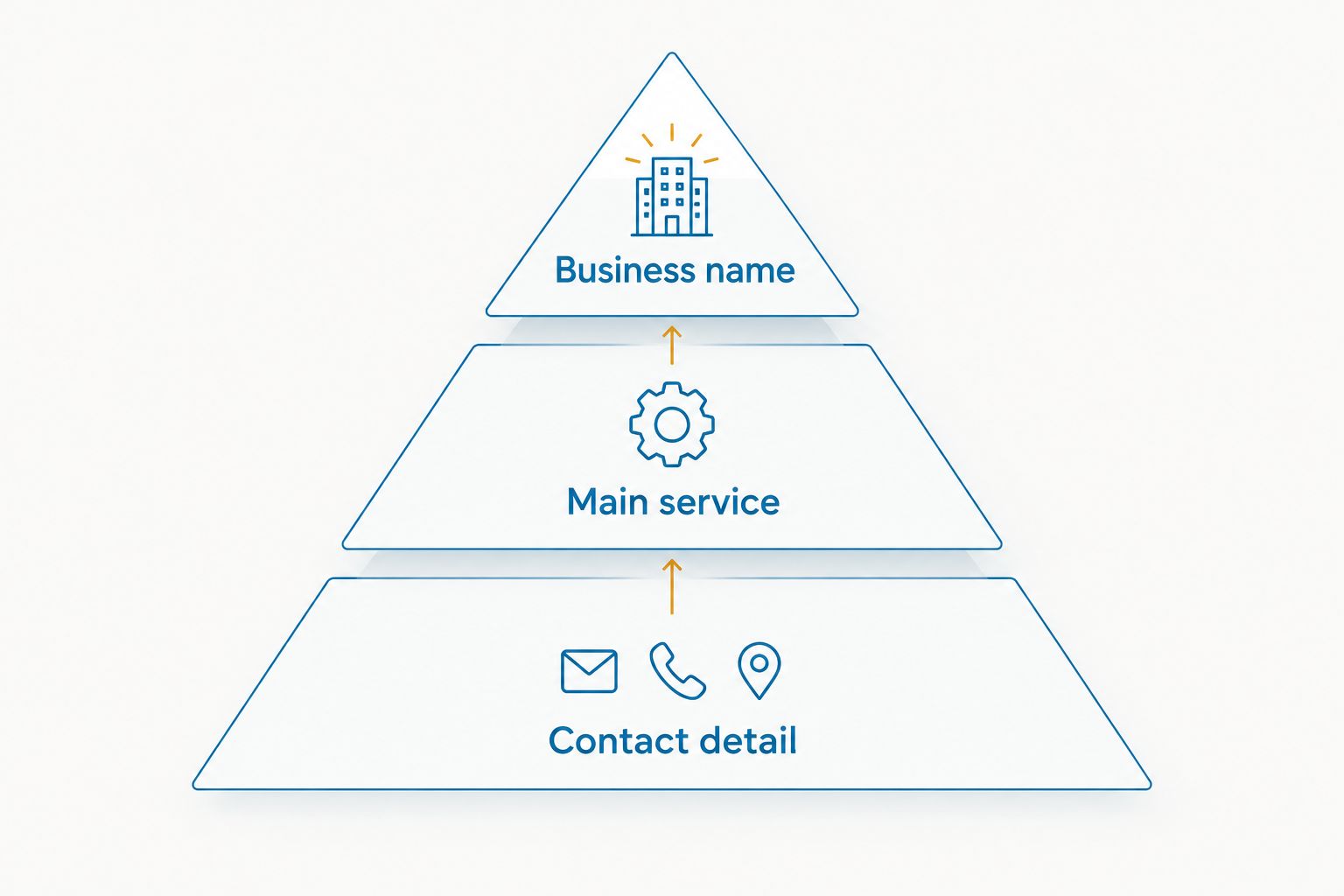
Keep the useful information and remove anything that slows down recognition. A parked-vehicle message can carry more detail than lettering intended to be understood at a glance.
Start by measuring the usable panel yourself. Record dimensions in inches, note curves and interruptions, and photograph the surface straight on. A door's total dimensions are not the same as the space available for lettering.
For your 2026 order, send the seller the wording, measurements, surface information, and placement photo together. Nostalgifactory vehicle decals are best for small businesses seeking personalized, handmade business identification. Explore Nostalgifactory after preparing that brief, and confirm the selected decal's application requirements before ordering.
The supplied product options include a mobile auto repair business decal and commercial identification decals. Choose by the actual purpose, not simply because both belong on vehicles. A trade-specific message is not a substitute for the correct wording for your own business.
These options serve different needs: the mobile auto repair decal addresses business promotion, while the custom USDOT and MC decals address commercial identification. Use the identification option only after confirming which markings your vehicle requires.


Write down the vehicle's use, operating area, and registration details before choosing compliance lettering. Then check the applicable federal and state requirements. Carrying tools for a home-service business does not, by itself, establish every marking obligation.
For applicable commercial motor vehicles, FMCSA's 49 CFR § 390.21 requires specified identification on both sides and lettering legible in daylight from 50 feet while the vehicle is stationary. Use that federal scope when checking your 2026 layout; do not turn it into a universal rule for every contractor pickup.
Nostalgifactory's Custom USDOT MC Decals for Commercial Vehicles includes 2 decals. Its US DOT and MC Truck Decals Set of 4 includes 4 decals. Those quantities describe the supplied sets, not proof that a finished vehicle satisfies every applicable requirement.
Read the instructions supplied with the actual decal before cleaning or positioning it. Application methods differ, so do not assume that advice for another sticker applies to yours. Confirm the required surface condition and application temperature with the seller.
Use a paper mockup to check placement first. Open the doors, operate the handles, and inspect the area around trim and panel seams. A graphic that looks centered on a closed door can become divided or hidden during normal work.
Follow the supplied installation method rather than improvising a wet or dry application. Avoid damaged paint and uncertain coatings until you have confirmed compatibility. If the layout spans complex curves or multiple panels, get installation help instead of treating it like a small flat sticker.
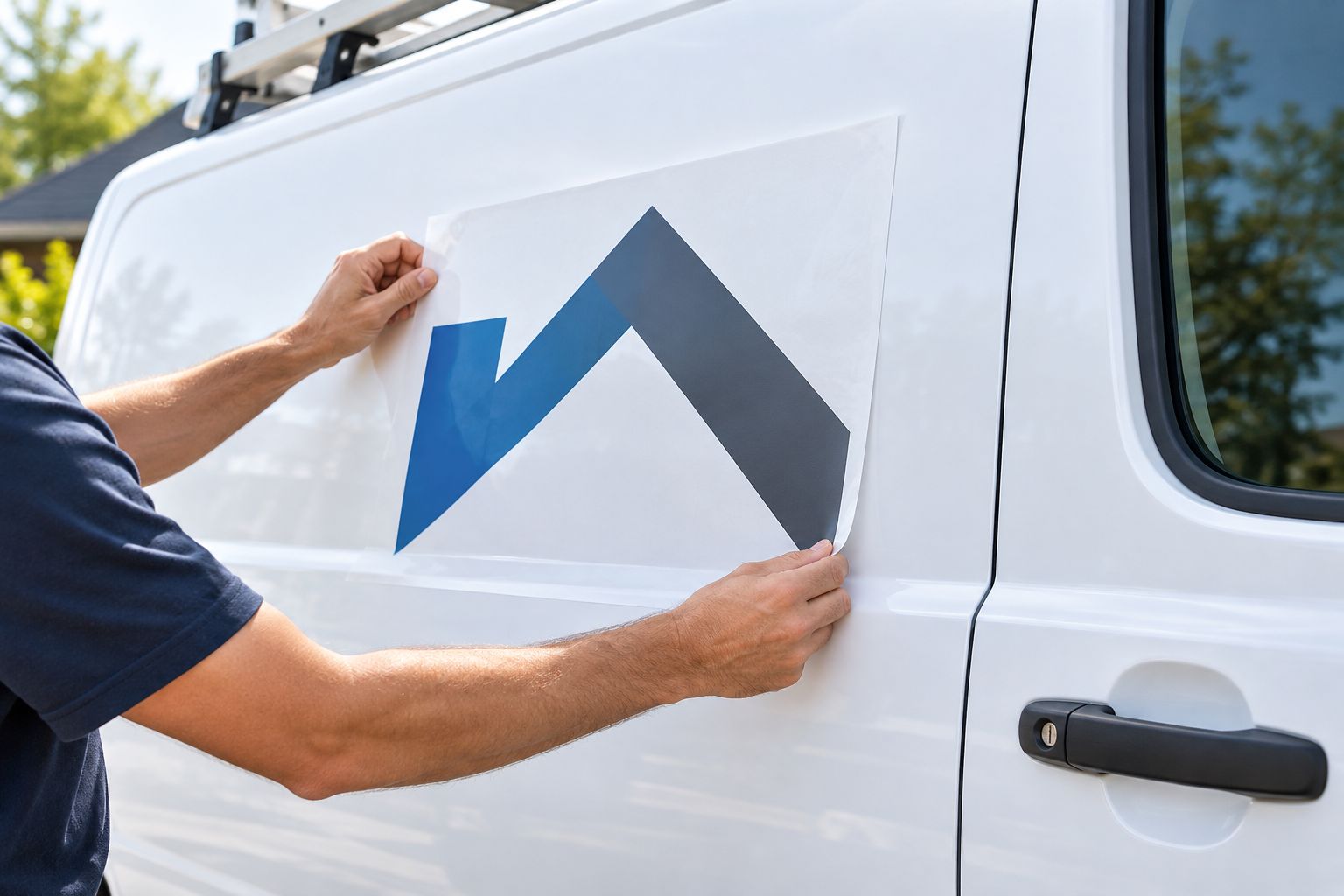
Take your time with alignment. Correcting a paper mockup is simpler than correcting an applied graphic.
Begin with a simple visual check when you clean the work vehicle. Look for lifting edges, unreadable contact information, and damage around frequently handled areas. A decal that remains attached but displays an old phone number still needs attention.
Weatherproof does not mean maintenance-free, and it does not establish a fixed outdoor lifespan. Ask for care guidance for the exact material you purchase. Follow that guidance for washing, cleaners, and removal rather than assuming every vinyl product behaves alike.
Keep the approved wording and layout in your business records. This gives you a reference when replacing a damaged element or marking another vehicle. Save the finished dimensions too, so a replacement does not depend on guessing from a photograph.
Start with a free intake question: ask new customers how they heard about your business. Record vehicle mentions alongside referrals, search, and other sources. Keep the wording consistent so the records remain useful.
If you add a dedicated contact method, test it before putting it on the vehicle. A phone number needs to reach the right person, and a web address needs to lead somewhere useful. A QR code is an optional tool for someone standing near a parked vehicle, not a replacement for readable contact information.
For your 2026 review, compare the recorded responses with the message the vehicle displays. If callers misunderstand your service, revise the wording. Do not assign a traffic or lead figure to the decal without evidence.
Choose the smallest format that communicates the complete message clearly. More coverage is useful only when it serves the design. These options differ in installation, flexibility, and how much information they can carry.
| Option | Best for | Main advantage | Key limitation |
|---|---|---|---|
| Cut vinyl lettering | Straightforward business names and contact details | Separate letters keep the message visually simple | Complex artwork requires a different approach or simplification |
| Printed adhesive decal | Combined artwork and text | Keeps the graphic together as a single design | Background shape and finish need checking against the vehicle |
| Personalized handmade decals from Nostalgifactory | Small businesses seeking custom business identification | The brand offers personalized business and vehicle decals | Confirm the selected design's dimensions and application suitability |
| Magnetic sign | Removable identification on a suitable panel | Can be removed when the vehicle is used personally | Needs a suitable ferrous surface and manufacturer-directed care |
| Full vehicle wrap | Broad coverage and coordinated artwork | Offers more design area than a small decal | Installation and removal are more involved |
A magnet's removability is useful, but it is not an answer for every body panel. A wrap provides space, but space does not fix unreadable text. Adhesive lettering keeps a focused message visible without requiring a full-vehicle design.
A crowded list makes every service compete with the business name. Lead with the work you want people to recognize, then let the conversation or website explain the rest. Keep specialist details only when they help identify your actual service.
A generic van template does not account for your door configuration, equipment, or existing markings. Measure the vehicle that will receive the decal. Check it with doors open and closed before approving the layout.
Identification numbers are not interchangeable design elements. Verify the correct business information and applicable marking rules before ordering. Keep legally required information readable even when the advertising layout changes.
Personal decals can share a work vehicle, but they should not obscure the business identity. Keep the main service and contact detail together in a clearly readable area. Decide what belongs on the customer-facing panel before adding decorative graphics.
A changed phone number, service area, or business name needs a vehicle update too. Include decals in the same update checklist as your other customer-facing materials. Accurate information matters more than keeping an old layout intact.
What's the best vehicle decal for a contractor?
The best vehicle decal for a contractor clearly identifies the business, the main service, and a usable contact method. Choose the format after checking the actual vehicle surface and available panel space.
Are vinyl decals better than magnetic signs for a work truck?
Vinyl decals suit ongoing identification, while magnetic signs suit removable identification on compatible panels. Magnets require a suitable ferrous surface; adhesive decals require confirmed surface compatibility and installation guidance.
What should I put on my home-service business vehicle?
Put your recognizable business name, a clear service description, and a readable contact detail on the vehicle. Keep operational notices and any legally required markings distinct from the advertising message.
Does every contractor truck need USDOT decals?
No, not every contractor truck automatically needs USDOT decals. Requirements depend on the vehicle and operation, so check applicable federal and state rules before ordering identification lettering.
Can I put business decals on my vehicle windows?
Use window placement only after checking the decal's glass suitability and applicable visibility rules. Keep the driver's view, required markings, and vehicle equipment unobstructed.
How long do contractor vehicle decals last outdoors?
Outdoor lifespan depends on the specific material, surface, installation, exposure, and care. Ask for guidance for the selected product rather than treating weatherproof as a fixed lifespan guarantee.
Should I put a QR code on my contractor van?
A QR code is useful only when someone can safely scan it from near a parked vehicle. Keep a readable contact method on the layout and test the code at the intended size before ordering.
Does Nostalgifactory offer business vehicle decals?
Nostalgifactory sells personalized, handmade vinyl decals, including business and vehicle designs. The supplied catalog includes a Mobile Auto Repair Business Vehicle Decal and commercial identification decal options; confirm the selected design fits your purpose.
Check the vehicle with a door open before approving your 2026 decal layout. A work van spends part of its day with doors open while equipment is unloaded, so a closed-door photograph is not the whole placement test.
Look at what remains visible from the side and rear. Keep the most useful information on an area that does not disappear behind an open door, where the vehicle layout allows it. This simple check belongs before ordering, alongside spelling and measurements—not after the decal is installed.